
To raise awareness and increase environmental awareness, every year, on April 22, World Earth Day is celebrated, the largest mobilization on the planet, born in 1970 in America, which inspired 20 million Americans – at the time, 10% of the total population of the United States – to take to the streets, parks and auditoriums to demonstrate against the impact of 150 years of industrial development that had left a growing legacy serious consequences for human health.
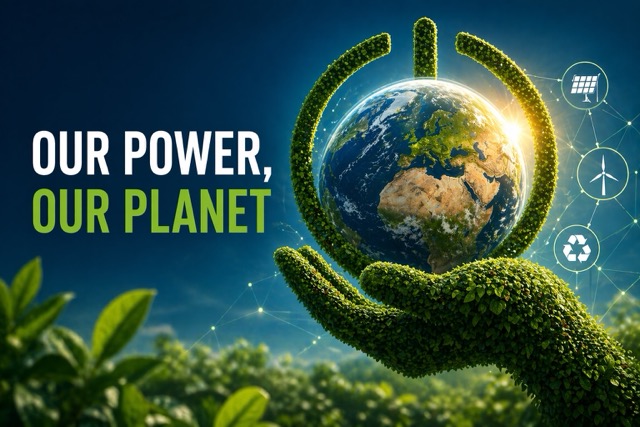
In the context of the 56th edition of Earth Day, the theme “Our Power, Our Planet” invites us to reflect on how the technologies at our disposal can be used responsibly to reduce the environmental impact of industrial activities.
In the world of WEEE recycling – and in particular electronic boards (PCBs) – this “power” takes shape through advanced automated plants, capable of transforming complex waste into valuable resources, reducing dependence on virgin raw materials and concretely contributing to the transition to a circular economy.
Electronic boards: from critical waste to strategic resource
Electronic boards represent one of the most complex fractions of electronic waste. They contain high-value materials such as gold, silver, copper and palladium, as well as components and combinations of materials that are difficult to treat using traditional methods.
Without advanced industrial processes, the risk is twofold: loss of precious resources and high environmental impacts linked to inefficient disposal or unsustainable practices. And that’s where automation comes in.
Our Power: Automation as an Enabler of Advanced PCB Recycling
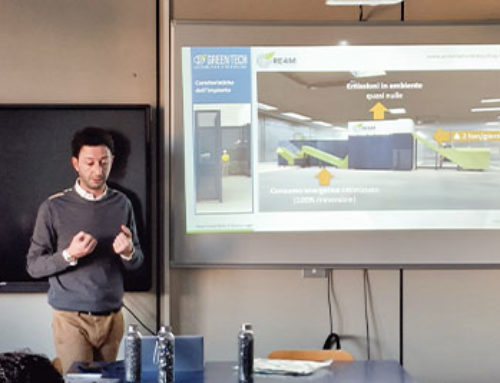
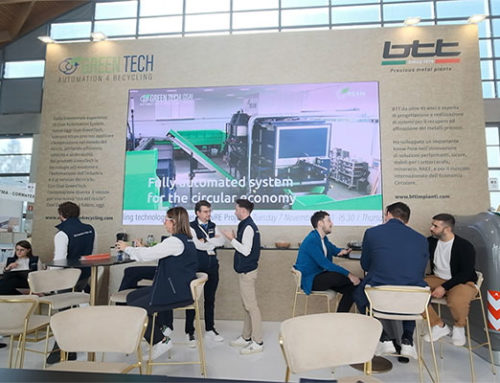
The RE4M – Recycling 4 Manufacturing plant was created to respond to this complexity through a fully automated system, designed for the valorization of the materials contained in the electronic boards.
Thanks to a thermomechanical process, the components are separated from the PCBs in a controlled and repeatable way and, the subsequent selection and separation phases make it possible to obtain fractions also intended for the direct refining of precious metals through hydrometallurgy processes.
Through industrial automation, heterogeneous waste streams are thus managed in a stable way, the precision of treatment increases and the dispersion of materials is reduced.
Consistent quality of the secondary raw material
For the circular economy to work, it is not enough to recover materials: it is essential to guarantee their quality.
The automated processes of the RE4M plant make it possible to:
– Obtain high quality secondary raw material
– Maintain constant standards over time
– Improve the reliability of the recovered material for new production cycles
This approach makes the recycling of electronic boards not only environmentally virtuous, but also industrially and commercially sustainable.
In addition, the availability of data transforms automation into a tool for continuous improvement, reducing waste and unnecessary energy.
Our Planet, reducing the impact
The efficient recovery of precious metals from electronic boards represents a concrete alternative to the extraction of new natural resources, often characterized by a high environmental impact.
Thanks to highly efficient automated processes:
– the amount of WEEE destined for disposal is reduced
– the overall environmental impact is limited
– a virtuous cycle is created in which waste becomes resources
The recycling of electronic boards thus becomes a strategic lever for the protection of the planet and the theme of World Earth Day finds one of its most concrete declinations in the recycling of electronic boards.
The RE4M plant demonstrates how technology can transform complex waste into valuable secondary raw materials, reducing environmental impact and supporting a true circular economy.
At Osai GreenTech, technological innovation is not an end in itself, but a concrete tool to use our industrial power responsibly, for the benefit of the planet.